
Let’s get the panic out of the way. According to Pew, 73 percent of Americans under 30 now expect AI to mean fewer jobs over the next 20 years, up from 61 percent just two years ago. If you’ve spent the past year watching tech CEOs announce the end of white-collar work between podcast ad reads, you could be forgiven for retitling your résumé “Professional Prompt Whisperer” and calling it a day.
Take a breath. Close the doomscroll. Then take a closer look at who’s selling the apocalypse.
The loudest warnings that AI will eat your career come from the people selling AI. Funny how that works. A CEO who says his product will replace half of entry-level office workers isn’t issuing a public service announcement. He’s pitching every CFO with a payroll. Fear, uncertainty and doubt moves product. The same moves venture capital. And, conveniently, it also moves lawmakers to write rules only the biggest companies can afford to follow.
So, what does the data actually say?
Something more interesting than doom. A Stanford study found that employment for 22 to 25 year-olds in the most AI-exposed jobs fell about 13 percent since 2022, while older workers in the same jobs held steady. That’s real, and if you’re 24 and chasing your first coding gig, it stings. But the Dallas Fed, looking at the same trend, calculated that it explains about a tenth of a percentage point of the rise in unemployment, and cautioned that it “may not be causal.” A separate study of 243 million new hires across four countries found the entry-level slump tracks remote work more closely than AI. Turns out it’s hard to learn the ropes when nobody’s in the office to show you where the ropes are.
None of this is new.
Roughly 40 percent of Americans once worked on farms. Today it’s about 1 percent, and nobody is nostalgic for the plow. Today nearly three in four Americans admit they know little or nothing about farming, and the food still arrives, because the economy didn’t need you to know where milk comes from. The economy needed you to do something else. Civilization survived. Brunch is thriving.
Bank of America’s economists estimate that 60 percent of today’s jobs didn’t exist in 1940. Your grandparents’ guidance counselor never mentioned “data scientist” or “social media manager.” Yours can’t name the jobs your kids will hold, either. That isn’t a failure, it’s a success. It’s how a growing economy works.
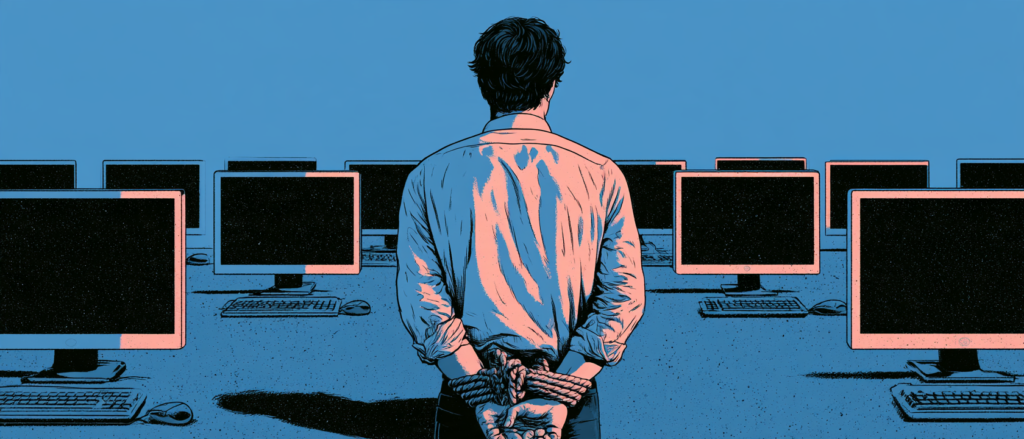
Here’s the part the doomers skip: so far, AI may be the best thing to happen to the newbie.
In one well-known study of customer-support agents, AI assistance raised productivity most for the least experienced workers, letting rookies perform like veterans in months instead of years. A 26-year-old with a laptop and a decent model now has the research assistant, copy editor, bookkeeper and junior coder that used to cost a startup its seed round. If you’ve ever wanted to start something, the barrier to entry just collapsed. Your parents needed a bank loan and a storefront. You need a Wi-Fi password.
Writer Cory Doctorow warns about “reverse centaurs,” workers reduced to serving the machine instead of being served by it. Fair worry. But the answer is choice: the freedom to switch employers, freelance, launch your own shop and use the tools that work for you. That freedom is exactly what tends to vanish once government decides to “manage” a transition.
Which brings us to the real threat to your career: not the chatbot, but the politician holding a press conference about the chatbot.
Watch for proposals to tax robots, license AI models, ban AI from hiring decisions or require a permission slip before a startup can ship. Each is pitched as protecting workers. Each protects incumbents. Big firms can hire a compliance department. Your friend’s two-person startup cannot. Regulation is the one product incumbents always buy in bulk. Meanwhile, the same legislators keep piling up the barriers that already hold young people back: licenses for jobs that don’t need them and zoning rules that make it impossible to afford living near the work.
So be skeptical. Be skeptical of anyone, CEO or senator, who wants you scared, and ask what they’re selling. Learn the tools. Build things. Demand the freedom to use what works.
The robots aren’t coming for your job. They’re coming for your boring busywork. The bigger risk is a government that decides to protect you from the future by making sure you never get there.
Bartlett D. Cleland is a PRI Senior Fellow and Managing Principal at Madery Bridge Associates, LLC.