
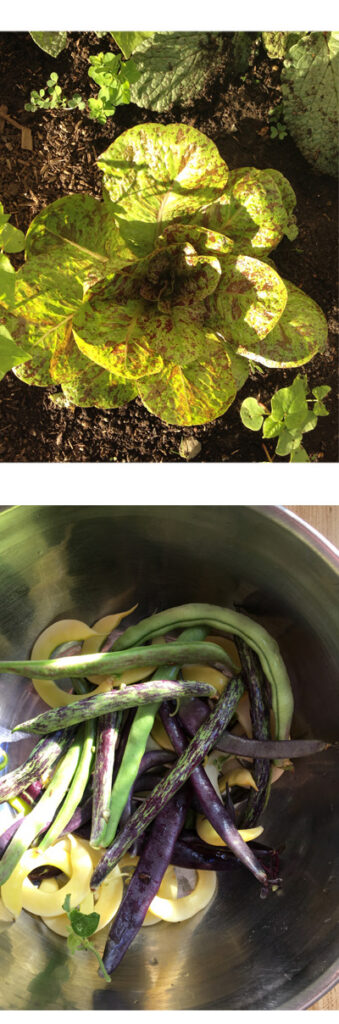
Do you like to cook? Are you intrigued by the vegetables piled up at the farmers market—the purple carrots, striped tomatoes, and lemon cucumbers?
Then perhaps it’s time to grow your own.
Not because you need to become a homesteader. You don’t need overalls. You don’t need chickens. You don’t need six acres, a tractor or a social-media account devoted to sourdough starter.
All you need is a pot and some dirt.
Growing your own opens the door to varieties, colors and flavors that can be difficult to find at the supermarket—or expensive when you do find them. And lately, “expensive at the supermarket” is becoming less of an exception and more of a recurring theme.
The $3 Lettuce Experiment
Consider lettuce.
Here’s the math that should make any grocery shopper emotional: about $2.99 gets you a packet of roughly 300 lettuce seeds. Even if half of them ghost you, that’s still 150 heads of lettuce for the price of one sad, plastic-wrapped head at the store. That’s not a rounding error—that’s a farming subsidy you’re giving yourself.
Obviously, you’ll have expenses for soil, containers and water, and not every seed becomes a giant supermarket-size head. But the economics are still compelling: a packet of seeds can cost roughly the same as a single head of lettuce. Better yet, many lettuces can be harvested “cut and come again.” Pick the outer leaves, leave the center growing and the plant keeps producing.
Your $3 seed packet has become a tiny leafy-green subscription service, without the high monthly fee!
It’s Not Too Late
Summer may be winding down, but gardening season isn’t necessarily over. Late summer and early fall are excellent times to plant cool-season crops in many climates.
Lettuce, spinach, arugula, kale, radishes and carrots generally prefer cooler weather anyway.
And getting started doesn’t require an elaborate raised-bed system worthy of a home-improvement show.
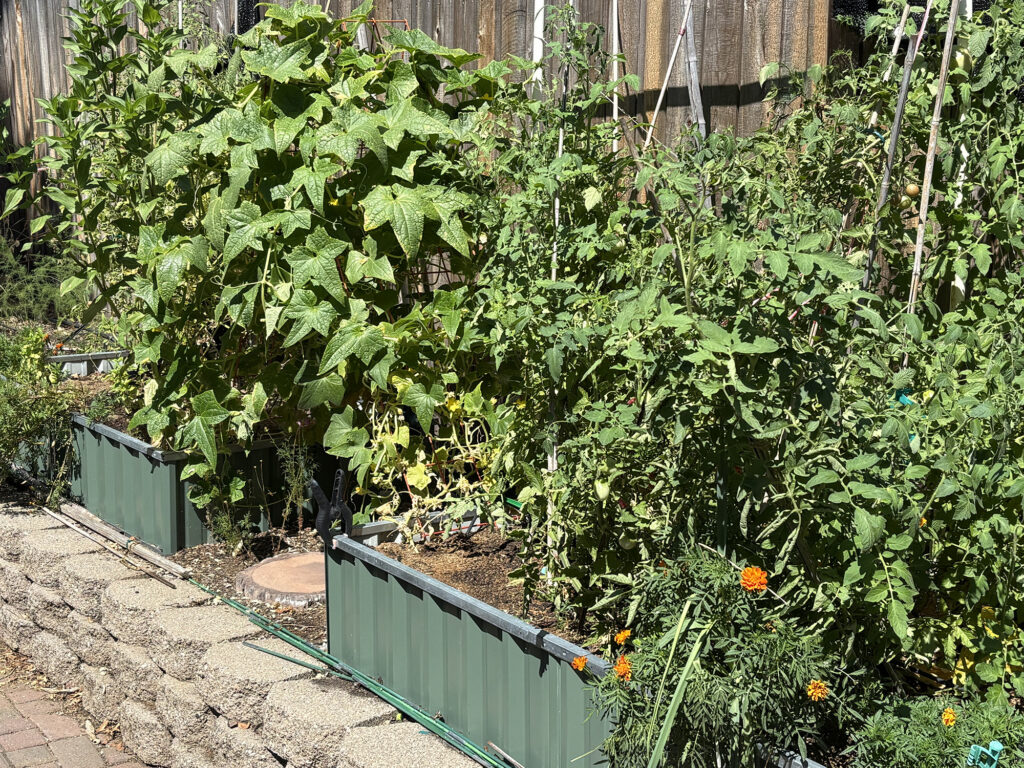
Start with containers. A pot on a patio, balcony, driveway or sunny front step can produce a surprising amount of food. If you’ve got enough room for a chair, you’ve probably got enough room for lettuce.
Tariffs Have Entered the Produce Aisle
If you’ve recently stood in the produce aisle wondering when lettuce acquired a luxury-goods designation, you aren’t imagining things.
According to the USDA, fresh vegetable prices in July 2026 were 6.3% higher than a year earlier. Tomatoes were up 12.8% and lettuce 7.5%. The USDA currently expects fresh vegetable prices to rise 5.9% overall in 2026.
There’s another reason to consider turning a few square feet of your home into agricultural territory: the increasingly complicated economics of getting food from a farm to your refrigerator.
Recent U.S. tariff policies have increased costs on imported goods and agricultural inputs. Federal Reserve Bank of New York researchers studying the 2025 tariffs estimate that about 26% of tariff increases passed through to consumer prices. Their research also found that tariffs can increase prices for domestically produced goods through higher input costs and reduced competition from imports.
It has to be planted, fertilized, harvested, packed, refrigerated and transported. Farms and distributors need machinery, fertilizer, packaging, vehicles and replacement parts. When those inputs become more expensive, some of those costs can eventually reach shoppers.
Meanwhile, the tomato growing three feet from your kitchen door has an exceptionally short supply chain:
You → backyard → tomato.
There are no container ships involved.
Grow the Expensive Stuff
If saving money is your goal, use precious garden space for things you actually like eating—and particularly things that make you wince when the cashier rings them up.
Fresh herbs are an obvious choice. Basil, parsley, thyme, mint, chives and rosemary can be expensive when repeatedly purchased in small supermarket packages. At home, many can be harvested over and over.
Then consider perennial crops.
Raspberries, blueberries, strawberries and asparagus require a larger upfront investment and, in some cases, patience. But once established, they can produce food for years.
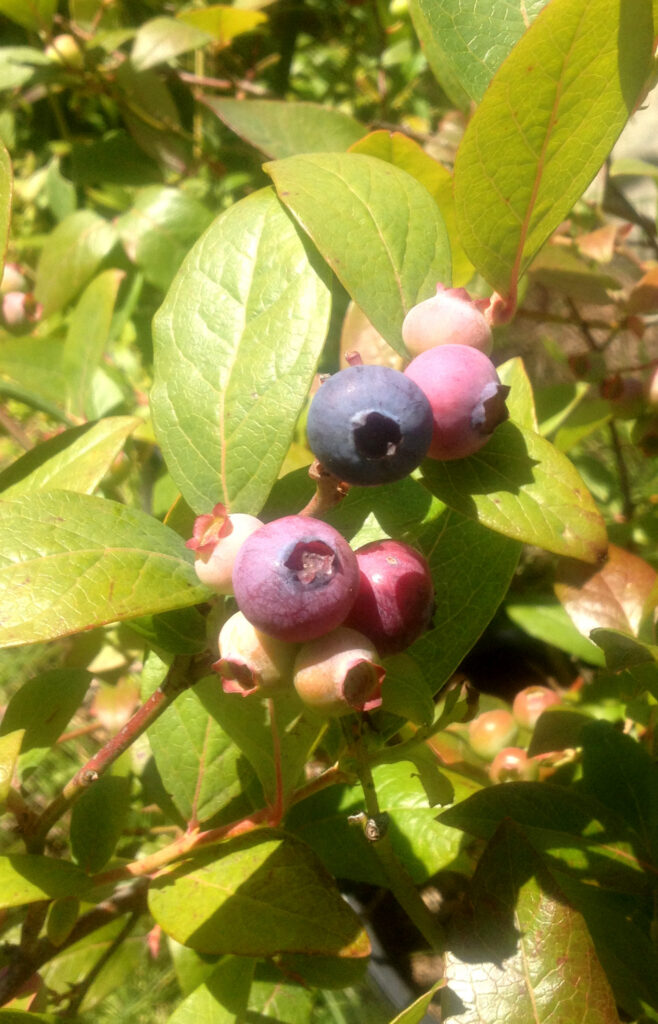
Blueberries are one of my favorites because you don’t necessarily need a yard. I grow mine successfully in containers.
The first harvest may not pay for the plant, but in a few years, while picking bowl after bowl of blueberries, you will scoff at the tiny clamshell package for $5.99 at the supermarket.
Short on Space? Go Vertical
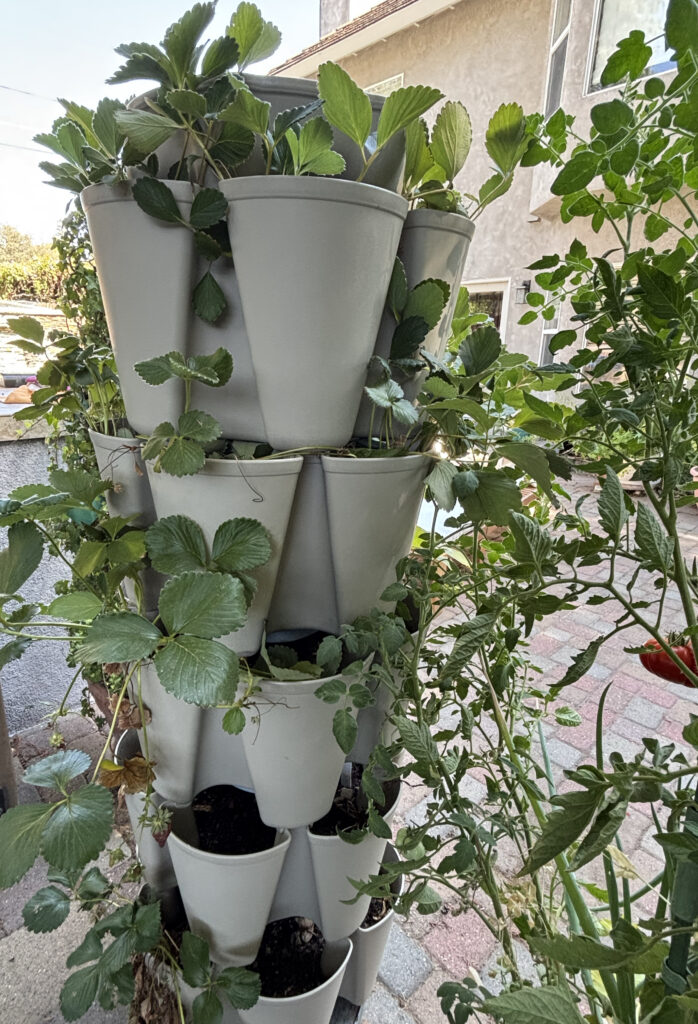
Vertical gardening can dramatically increase what you grow on a patio or balcony by using height instead of square footage.
I’ve experimented with wall-pocket systems without much success. They tend to have shallow planting areas that dry out quickly, and apparently plants object to living in what amounts to a shoe organizer.
I’ve had much better luck with vertical systems with deeper containers and designs that allow water to move through multiple levels.
But What About Water?
Fall can actually help here, too. Seeds and young plants need consistent moisture to get going, but cooler temperatures and seasonal rainfall can reduce how much irrigation is needed.
I’m also a huge fan of self-watering containers. I’ve even converted my 3 x 5 feet raised beds into self-watering beds. They use a reservoir beneath the soil, allowing moisture to reach the root zone as the plant needs it.
In my experience, they don’t just reduce watering. Plants seem to perform better with consistent moisture rather than the traditional gardening technique:
Forget.
Forget.
Forget.
Panic.
Flood.
Repeat.
Self-watering containers take the guesswork out of watering. Apparently plants appreciate consistency. Who knew?
And About That Cyclospora…
There’s one more timely argument for knowing where some of your food comes from.
This summer, federal health officials have been investigating a major multistate outbreak of cyclosporiasis associated with iceberg lettuce sourced from central Mexico. Cyclospora is a microscopic parasite that can cause gastrointestinal illness, and fresh produce has been associated with previous outbreaks.
That doesn’t mean backyard lettuce comes with an invisible force field. Homegrown produce can still become contaminated through unsafe water, animals, soil amendments or poor handling.
But growing food yourself gives you something that’s difficult to get from a long supply chain: knowledge.
You know where your lettuce grew. You know what water you put on it. You know who handled it.
Start Ridiculously Small
The biggest mistake new gardeners make may be starting too big. It can be addictive once you get started, and those seed packets with images of beautiful and exotic vegetables are seductive!
Buy one pot. One bag of potting mix. One packet of lettuce seeds.
That’s it. Do not buy a greenhouse. Do not order a beekeeping suit.
Start there.
Once you’ve successfully grown something you can eat, something changes. That empty corner of the patio starts looking suspiciously like tomato territory. The sunny spot by the fence could hold berries.
At best, you’ve discovered that some of the freshest, most interesting—and cheapest—food available to you isn’t at the grocery store at all—it’s in your yard!